Less than a century ago the glacier reached almost to the sea. This is how the lagoon formed, why it keeps growing and how it became one of Iceland's best-known places.
Jökulsárlón is fed by Breiðamerkurjökull, an outlet glacier of Vatnajökull, Iceland's largest ice cap. For centuries the glacier tongue reached almost to the shore, and the ground where the lagoon lies today was under the ice. In the late 19th century the glacier began to retreat.
As the glacier pulled back, meltwater filled the hollow it left behind, and in the 1930s a small lake appeared. The name means 'glacial river lagoon'. It has grown ever since: in 1975 it covered about 8 km², and today it is more than twice that size. With depths of up to 284 m, it is the deepest lake in Iceland, and all of this has happened within a single lifetime.
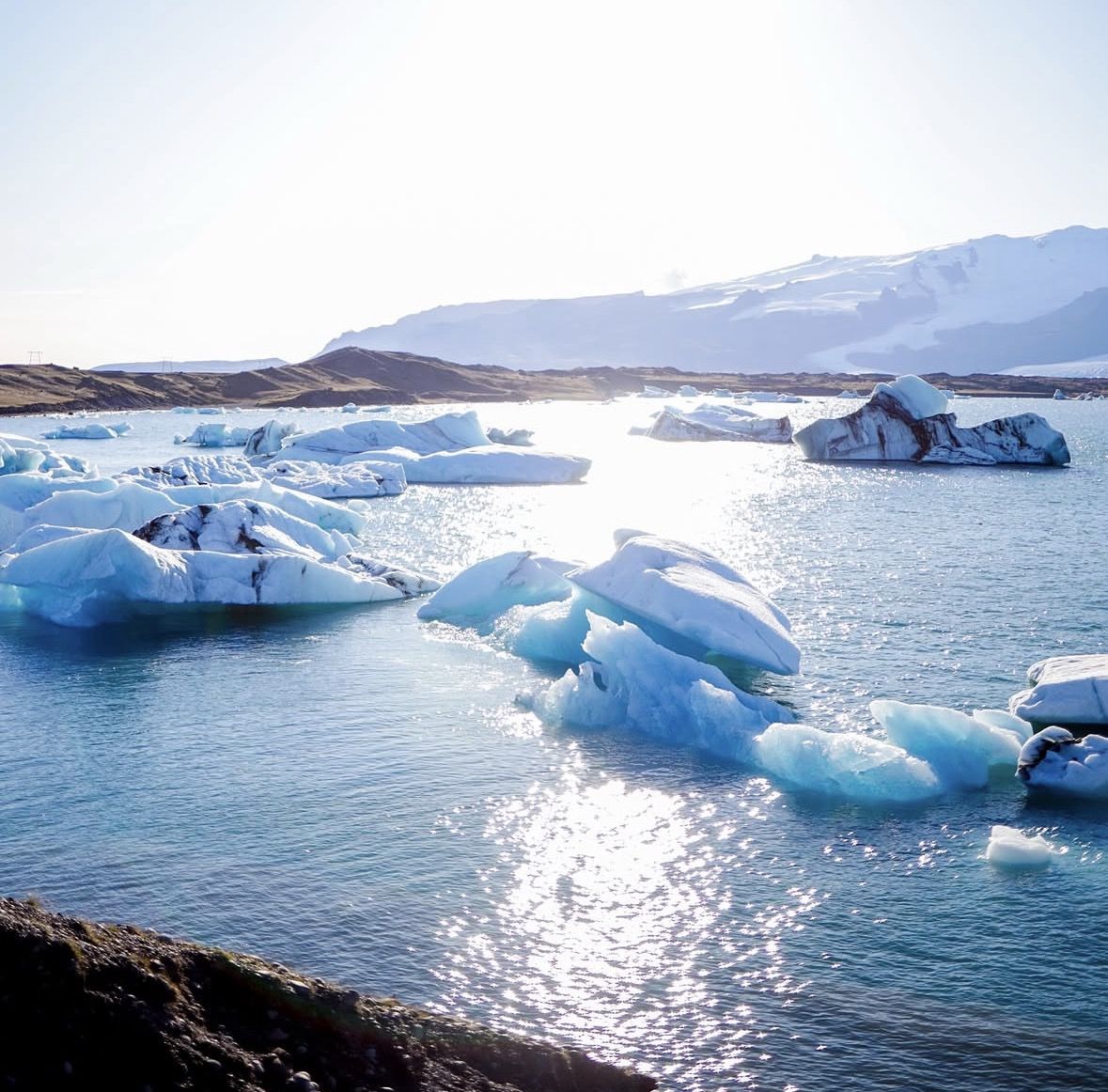
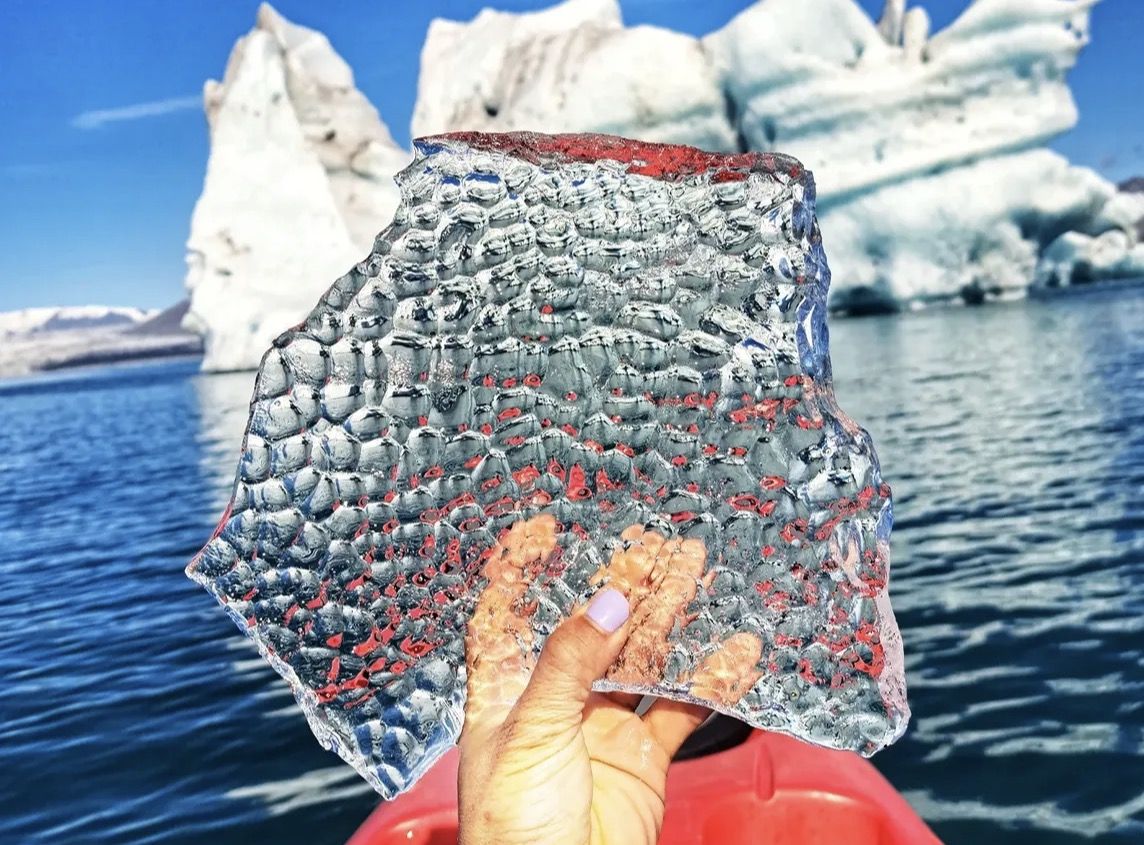
Icebergs break off the glacier front and drift across the lagoon towards the sea, which they reach through a short river channel under the Ring Road. Some are as big as houses. The blue comes from dense glacier ice, which absorbs red light; the dark stripes are volcanic ash from old eruptions under Vatnajökull. The tide pushes the ice back and forth, so the view changes from hour to hour.
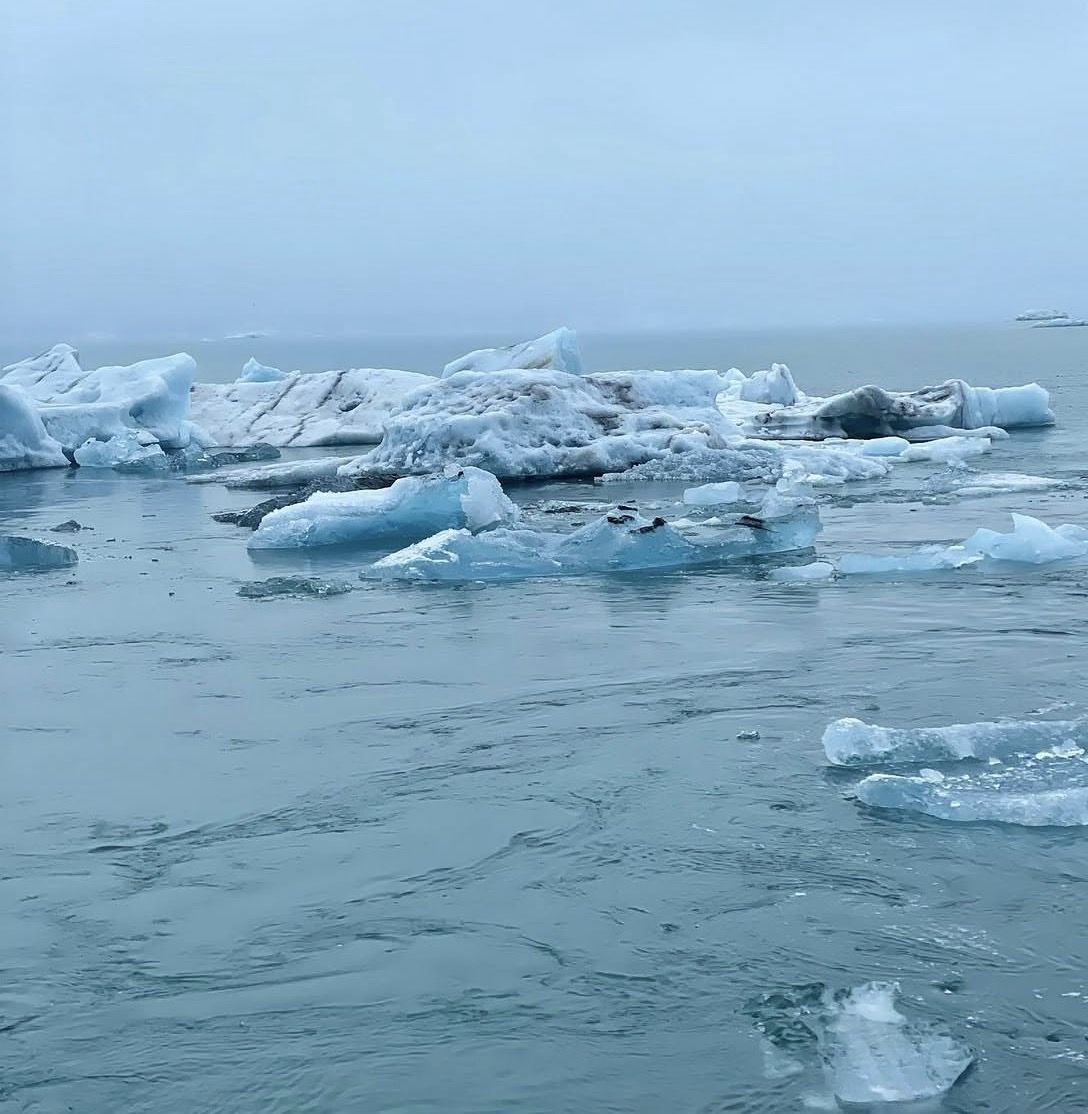
Seals are what most visitors hope to see. Seals rest on the ice, and in winter they gather in large numbers at the mouth of the lagoon to catch fish. Breiðamerkursandur, the plain around the lagoon, is an important nesting area for great skuas, red-throated divers, greylag geese and barnacle geese, which is why the national park asks you to keep to the marked paths in summer.
Across the road, ice that has drifted out to sea washes back onto the black sand of Fellsfjara, the beach known as Diamond Beach. Clear ice on black basalt sand draws photographers at sunrise and sunset, and how much ice lies there changes from day to day.
Film crews came early. Scenes from A View to a Kill (1985), Lara Croft: Tomb Raider (2001), Die Another Day (2002), Batman Begins (2005) and Beowulf and Grendel (2005) were shot on and around the lagoon, and advertisers have used it many times since.
The lagoon is also one of the clearest records of glacier retreat in Iceland. The national park notes that nowhere are the glaciers' changes easier to see than south of Vatnajökull, and the lagoon's growth since the 1930s is that change in plain view.
Boat tours have run on the lagoon for more than 35 years. Because the Ring Road passes right beside it, the lagoon became a standard stop on any drive around Iceland, and it is now one of the most visited places in the country. In 2017 the land around it became part of Vatnajökull National Park, which runs the car parks and the marked paths.
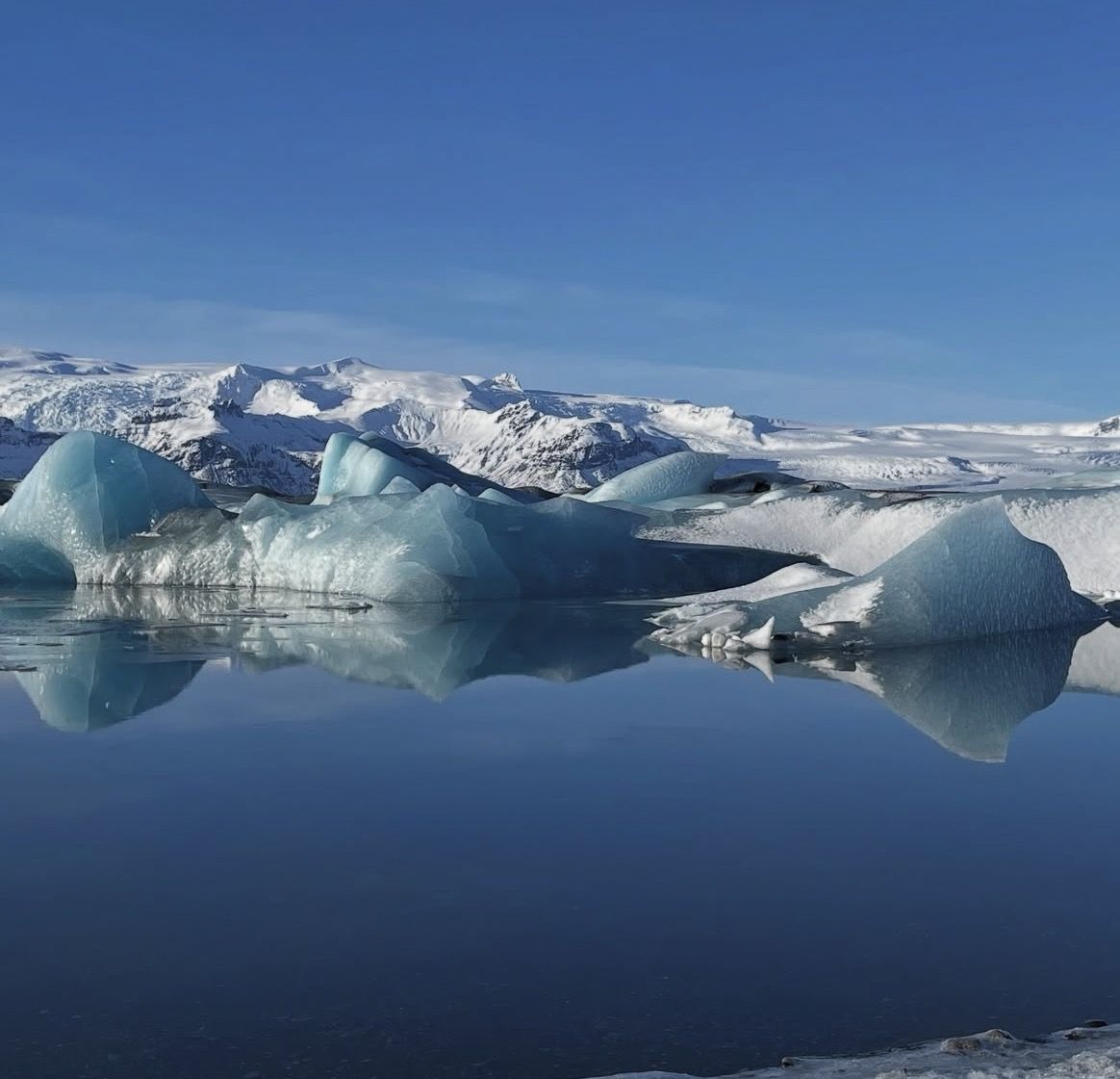
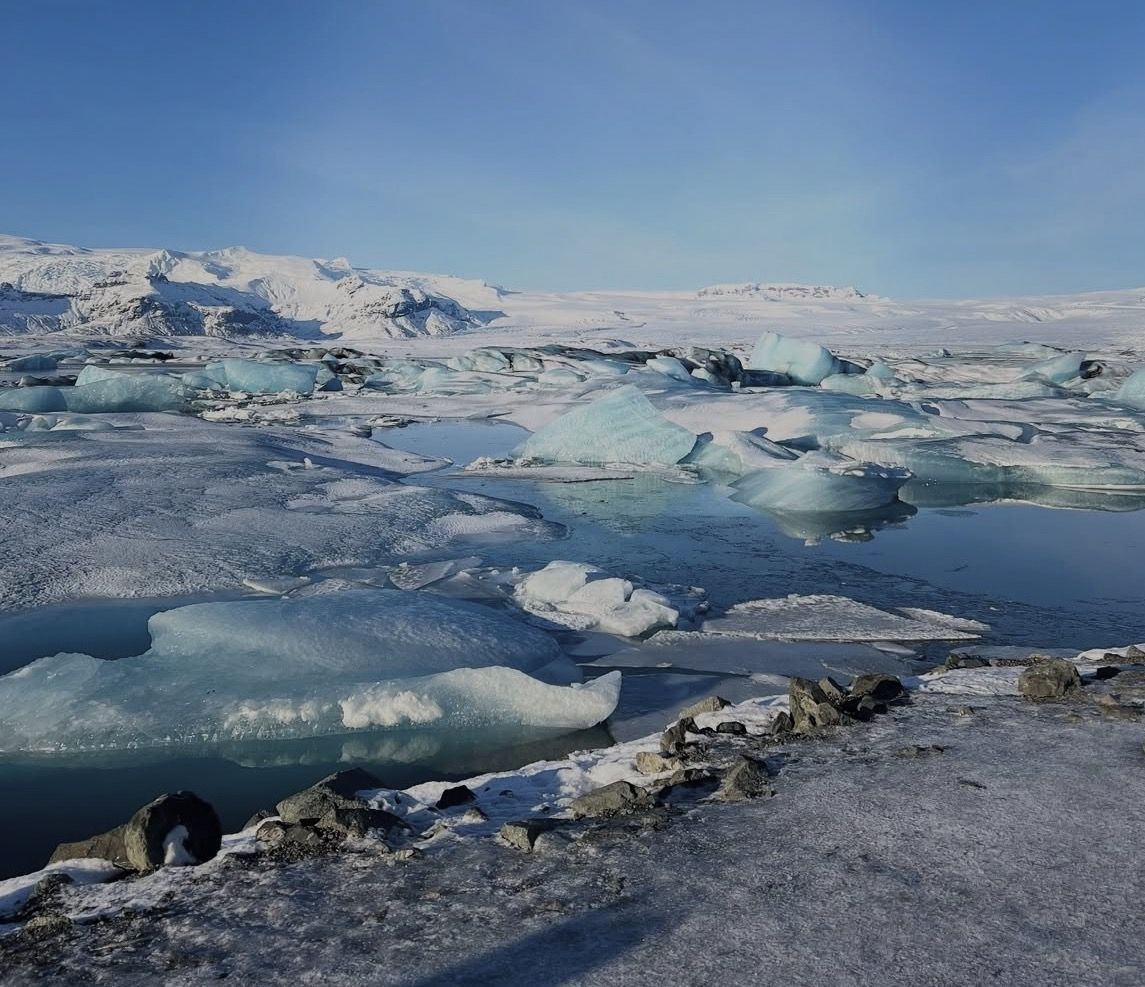
Measurements show the retreat speeding up. Where the glacier ends in the lagoon, icebergs break off its front, and that calving front has pulled back far faster than the glacier's edges on land. Today the front is about 8 km from the sea.
| Period | Average retreat |
|---|---|
| 1945–1965 (west lobe) | about 62.5 m a year |
| 1980–1998 (east and central lobes) | about 28 m a year |
| 2011–2013 (calving front) | about 100 m a year |
| Recent years (calving front) | up to 200–300 m a year |
The visitors have grown with the lagoon. In July 2025 alone, around 100,000 people came, according to figures reported by Iceland Review. The national park's rangers lead a free daily walk in summer, Blue gold, at 11:00 from the benches by the main car park, on exactly this subject: how the retreating glacier changed the landscape.
The glacier still breaks off new icebergs, so the lagoon never looks the same twice. You can walk the shore paths, go out on the amphibian boat or the Zodiac from May into the autumn, and in winter join a guided trip into the ice caves of Breiðamerkurjökull. On clear winter nights the northern lights sometimes appear over the water.
If you are driving the Ring Road, plan at least two hours here; if you are coming from Reykjavík, a day tour takes you there and back. The pages on boat tours, ice caves and parking cover the practical details.
Visiting the lagoon
Boat rides, ice cave trips and day tours from Reykjavík, compared side by side with their seasons and durations.
Compare the tours →